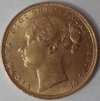
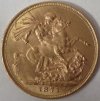
Ich habe eine Frage zu der im Folgenden abgebildeteten Münze:
An zwei Stellen ist diese eindeutig farblich heller als der Rest der Münze (eher silberfarben als golden).
1.) Anvers -> Kilimandscharo und 2.) Revers -> Hohenzollernschild (sehr deutlich!)...
Woran kann das liegen bzw. was ist der Grund für diese Farbunterschiede?
Folgendes Zitat stammt aus " The Royal Mint " ( 1871 ) von G. F. Ansell, der leitender Chemiker an der Anstalt war :
" Gold possesses as many colours , and exists in as many conditions, as any substance ordinarily met with. Those various changes are due to the existence of impurities in the metal, which are neglected in assaying, because the only business of te assayer is to determine that the sovereign actually contains the lawful weight of pure gold, and also so much alloy as is specified, what this alloy shall be is, in the abstract, a small matter so that it is not silver, because if it be silver it is worth the expence to separate it, and thereby destroy the coinage. Yet, altough the existence of such metals as lead, bismuth, tin, antimony, and arsenic,as well as palladium and osmium - iridium is not illegal, it becomes neccessary to seperate them, because these metals affect the coin in various ways. Palladium and platinum alloy with the gold only after considerable time, therefore these metals may generally be seen in the finsihed coin, frequently as a slight bar across its surface, sometimes as spots on its crenated egdes. Osmium- iridium causes trouble, inasmuch as it is so infusible, that it simply floats about in the melted gold, and several crystals agglomerate; where this takes place, the difficulty of manufacture is so great, that it is impossible to produce the desired amount of coin within to remedy as to weight. "
Ich glaube, hier haben wir die Antwort auf die Verfärbungen bei Deinem J 728, meinem 10 - Kronen- Stück, sowie bei diesem Sovereign, der unter Ansell im gleichen Jahr, in dem sein Werk erschien , produziert wurde.


 Das Rohgold war von statistisch zufällig wechselndem Goldgehalt.