Fälschungen britische Pfund

Registriert
23.05.2004
Beiträge
588
Reaktionspunkte
774
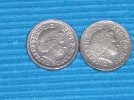
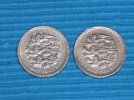
ich habe in schottland 2 wohl falsche münzen zu gbp 1,-- erhalten (beide übrigens bei 2 verschiedenen filialen von tesco)

fotos / details folgen am wochenende

hat noch jemand aus der sammlergemeinde falsche pfundmünzen- die sind doch häufiger anzutreffen wenn man diversen berichten im internet glauben darf
 
Ach, ist es in Großbritannien im Gegensatz zu Deutschland statthaft, als Fälschungen erkannte Metallstücke anstelle echter Münzen zum Bezahlen zu verwenden?
 
:D Petze Petze :newwer:

Es ist jedoch wirklich ratsam so etwas nicht öffentlich in ein Münzforum zu schreiben =) auch wenn ich nicht glaube das hier irgendwer irgendwen verpfeift :P.
 
War lange nicht mehr im Forum, deshalb meine Antwort erst heute.

Seit Jahren gibt die Royal Mint die geschätzte Anzahl der als Falschgeld umlaufenden One-Pound-Münzen mit 1% an. Im Frühjahr 2009 wurde das auf 2.5% erhöht. Das bedeutet für Nicht-Mathematiker, wenn man 40 dieser Münzen aus dem Umlauf besitzt ist höchstwahrscheinlich eine davon gefälscht.

Hier kommt hier noch der Link zum Falschgeld:

Ich stell sicherheitshalber mal den runtergeladenen Originaltext der Royal Mint rein, da die Homepage der Royal Mint "sehr dynamisch" ist, d.h. die Seiten wechseln oft.

£1 Counterfeit Coins
The Royal Mint takes counterfeiting and fraud extremely seriously. To help identify genuine £1 coins we have prepared an easy-to-use guide and poster for you to download.
Regular surveys are undertaken by the Royal Mint to establish the incidence of £1 counterfeit coins. The most recent survey indicated a counterfeit rate of around 2.5%.
Provisions for various offences connected with the counterfeiting of coins are included in the Forgery and Counterfeiting Act 1981. Enforcement of these provisions is entirely a matter for law enforcement agencies, such as the police and the Crown Prosecution Service.
Any amount of counterfeiting must be a matter of concern, and the Royal Mint is liaising with the Banks and Post Office to identify and withdraw counterfeits at cash centres.
It may not always be easy to spot a counterfeit £1 coin without close inspection. Features of counterfeit coins to look out for are set out below.
The date and design on the reverse do not match (the reverse design is changed each year). A list of designs and dates is available at our One Pound Coin Design page.
The lettering or inscription on the edge of the coin does not correspond to the right year.
The milled edge is poorly defined and the lettering is uneven in depth, spacing or is poorly formed.The obverse and reverse designs are not as sharp or well defined.
Where the coin should have been in circulation for some time, the colouring appears more shiny and golden and the coin shows no sign of age.
The colour of the coin does not match genuine coins.
The orientation of the obverse and reverse designs is not in line
 
hier mal die bilder - die münzen sind mir übrigens sofort aufgefallen - für so was habe ich einen blick

sind die aus der gleichen werkstatt???


weiters habe ich dort in schottland eine dort wohl eher seltene münze erhalten - jersey 1 pfund 1984 - ist wohl auch schon seit damals in dauerndem umlauf so wie sie aussieht
 

Anhänge

  • Münzen 005.jpg
    Münzen 005.jpg
    2 MB · Aufrufe: 218
  • Münzen 006.jpg
    Münzen 006.jpg
    2 MB · Aufrufe: 198
War lange nicht mehr im Forum, deshalb meine Antwort erst heute.

Seit Jahren gibt die Royal Mint die geschätzte Anzahl der als Falschgeld umlaufenden One-Pound-Münzen mit 1% an. Im Frühjahr 2009 wurde das auf 2.5% erhöht. Das bedeutet für Nicht-Mathematiker, wenn man 40 dieser Münzen aus dem Umlauf besitzt ist höchstwahrscheinlich eine davon gefälscht.

Hier kommt hier noch der Link zum Falschgeld:

Ich stell sicherheitshalber mal den runtergeladenen Originaltext der Royal Mint rein, da die Homepage der Royal Mint "sehr dynamisch" ist, d.h. die Seiten wechseln oft.

£1 Counterfeit Coins
The Royal Mint takes counterfeiting and fraud extremely seriously. To help identify genuine £1 coins we have prepared an easy-to-use guide and poster for you to download.
Regular surveys are undertaken by the Royal Mint to establish the incidence of £1 counterfeit coins. The most recent survey indicated a counterfeit rate of around 2.5%.
Provisions for various offences connected with the counterfeiting of coins are included in the Forgery and Counterfeiting Act 1981. Enforcement of these provisions is entirely a matter for law enforcement agencies, such as the police and the Crown Prosecution Service.
Any amount of counterfeiting must be a matter of concern, and the Royal Mint is liaising with the Banks and Post Office to identify and withdraw counterfeits at cash centres.
It may not always be easy to spot a counterfeit £1 coin without close inspection. Features of counterfeit coins to look out for are set out below.
The date and design on the reverse do not match (the reverse design is changed each year). A list of designs and dates is available at our One Pound Coin Design page.
The lettering or inscription on the edge of the coin does not correspond to the right year.
The milled edge is poorly defined and the lettering is uneven in depth, spacing or is poorly formed.The obverse and reverse designs are not as sharp or well defined.
Where the coin should have been in circulation for some time, the colouring appears more shiny and golden and the coin shows no sign of age.
The colour of the coin does not match genuine coins.
The orientation of the obverse and reverse designs is not in line

Wooow 2,5 % schon ne Menge würd ich mal so sagen, weiß jemand wie´s mit den deutschen Euros aussieht? Ich schätze mal 0,05 % =).
 
Zurück
Oben