"Serie - Neue Banknoten"

meikel schrieb:
Verstehe ich das richtig :confused: ? Der Präsident der Ägypt. Zentralbank hat nach einem Monat seine Unterschrift geändert, deshalb werden jetzt alle Banknoten mit seiner "alten" Unterschrift wieder eingezogen. :eek:


So in der Art!

Seit der Neue dran ist, werden nur noch Scheine mit seiner neuen U-schrift ausgegeben, die anderen älteren (mit der alten Sig.) verschwinden zunehmend aus dem Zahlungsverkehr!
 
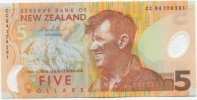
$5 Note Neuseeland mit Bollard Untrschrift

hier sind die letzten Infos zur neuen $5 note aus NZ mit der U-schrift von Bollard.

siehe dazu unter "The latest news on the Banknotes of New Zealand"

http://homepages.ihug.com.au/~scottdy/News Update.html

Quelle: by Scott de Young (homepage)
 

Anhänge

  • Bollard $5 2004.jpg
    Bollard $5 2004.jpg
    54,6 KB · Aufrufe: 817
  • Sig Bollard.jpg
    Sig Bollard.jpg
    101,6 KB · Aufrufe: 612
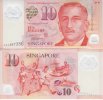
MAS Singapore gibt neuen Polymeren $10 Schein heraus

Hier der Beitrag!

ACHTUNG: ANNEX A und B sind interessant, bitte im Text anklicken!

MAS Issues $10 Polymer Portrait Notes

Singapore, 30 Apr 2004...The Monetary Authority of Singapore (MAS) today announced that it will introduce $10 polymer portrait notes into circulation on 4 May 2004. To preserve public familiarity and minimise modifications to note handling machines, the design of the new polymer notes is similar to the current $10 paper portrait notes except for a few changes to incorporate security features unique to polymer technology. MAS will continue to issue the current $10 paper notes as part of a phased introduction of the new $10 polymer notes.

2 To date, 15 countries have introduced polymer notes in their currency system. Among them Australia, New Zealand and Romania have fully replaced paper notes with polymer ones. Polymer notes can last three to four times longer than paper notes as the notes are more resistant to dirt and are not easily torn. They are therefore more cost-effective. Their security features offer better protection against counterfeiting, particularly against digital counterfeiting e.g. scanners, colour printers and photocopiers.

3 For the above reasons, and the positive experience in countries that had adopted polymer notes, MAS is re-introducing polymer notes in Singapore. Singapore introduced its first polymer notes in 1990. The note lacked wide acceptance then as there were machine acceptance issues, the main one being the ability of ATMs to dispense these notes. The public also found the notes springy, sticky and difficult to fold. These problems have since been overcome with technological advances. Printing has also become less costly and it is feasible to issue them more extensively. The $10 denomination was selected as it is commonly used in cash payments. It is also widely dispensed through ATMs and accepted at Cash Deposit Machines (CDMs). Please see Annex A for further details.


Availability and Usage

4 As a start, MAS will issue $100 million worth of new polymer notes. Depending on public demand for them, more polymer notes will be issued subsequently. The phased introduction will allow banks and businesses to fine-tune their machines and make the necessary adjustments gradually to avoid abrupt and costly changes. For the launch, the notes will be available at seven banks and at selected ATMs and CDMs that they have calibrated to dispense and accept the notes. The notes can also be used at the General Ticketing Machines (GTMs) at nine SMRT stations. Please refer to Annex A for the list of banks and GTMs.

5 As the polymer notes are legal tender, they can be used for all cash transactions, including machines that have been calibrated to accept the notes. The polymer notes can also be deposited at all commercial banks in Singapore.


Similarities and Differences

6 Most of the security features on the $10 paper notes have been retained in the polymer notes, and both have a similar look and feel. They have the following similarities:

* Portrait of Singapore's first President, the late Encik Yusof bin Ishak, on the front, and Sports' motif at the back
* Same colour (predominantly red)
* Same size (141 mm x 69 mm)

7 The main differences are in the additional security features that are unique to polymer notes. These are:

* Two see-through windows - one on the top-left hand side, and the other at the bottom-right corner
* A stylised gold Singapore Lion symbol with a hidden image, beside the top-left hand window. An image of the Singapore Arms will appear at varying angles
* The security thread now takes the shape of the Singapore island instead of a straight line

Please refer to Annex B for details.

Commemorative Notes

8 MAS will also issue a limited edition commemorative $10 polymer note, each over-printed with the text "Commemorative First Issue by MAS". Only 10,000 of these notes are printed and they will be sold at $35 each. The public can submit their orders via the mail-order form found in The Straits Times and Lian He Zao Bao on 4 May 2004, or they can do so online through the MAS website. More details can be found on the MAS website and in the press advertisements.

***


Quelle: MAS
http://www.mas.gov.sg/masmcm/bin/pt1MAS_Issues_10dollar_Polymer_Portrait_Notes.htm
 

Anhänge

Indien: neue Scheine mit Sig. von Gov. Y.V. Reddy

Meldung 1

2004 - The Reserve Bank of India will shortly be issuing Rs.5 denomination bank notes with insert letter "L" in numbering panel in Mahatma Gandhi Series. These notes will bear the signature of Dr. Y.V. Reddy, Govenor. Except for the change in insert letter, the design of these notes to be issued now is similar in all respects to those issued earlier in Mahatma Gandhi Series. All Notes in the denomination of Rs.5 issued by the the Reserve Bank in the past will continue to be legal tender. The Reserve Bankof India Press Release, June 04, 2004.

Meldung 2

2004 - The Reserve Bank of India will shortly be issuing Rs.100 denomination bank notes with insert letter "L" and Rs.10 denomination bank notes without insert letter in numbering panel in Mahatma Gandhi Series. These notes will bear the signature of Dr. Y.V. Reddy, Govenor. Except for the signature of the Govenor for RS.20 and the change in insert letter for RS.100, the design of these notes to be issued now is similar in all respects to those issued earlier in Mahatma Gandhi Series. All Notes in the denomination of Rs.100 and Rs.10 issued the the Reserve Bank in the past will continue to be legal tender. The Reserve Bank of India Press Release, May 18, 2004.

Meldung 3

2004 - The Reserve Bank of India will shortly be issuing Rs.100 denomination bank notes with insert letter "F" and Rs.20 denomination bank notes without insert letter in numbering panel in Mahatma Gandhi Series. These notes will bear the signature of Dr. Y.V. Reddy, Govenor. Except for the signature of the Govenor for RS.20 and the change in insert letter for RS.100, the design of these notes to be issued now is similar in all respects to those issued earlier in Mahatma Gandhi Series. All Notes in the denomination of Rs.100 and Rs.20 issued the the Reserve Bank in the past will continue to be legal tender. The Reserve Bank of India Press Release, May 08, 2004.

Quelle: Reserve Bank of India, 2004
www.rbi.org.in
 
Zuletzt bearbeitet:
Eastern Caribbean Central Bank (ECCB) - neue 10er und 20er

Die ECCB hat ge-upgradete Schein zu $10 und $20 herausgegeben.

Upgraded EC $20 To Start Circulating In St Vincent And The Grenadines

The phase in process of the recently upgraded ECCB banknotes will commence in St Vincent and the Grenadines on May 12, 2004, when the twenty-dollar notes will be put into circulation.

The security thread in these notes fluoresces under UV light, and the letters ECCB as well as the value of the note can be seen in yellow, against a blue background on the front of the note. When viewed from the back, the thread appears yellow-green in colour. A second security thread has also been added.

The notes have a highly reflective silver filigree foil on which the value of the note is evident. The letters ECCB, as well as the denomination are also visible in fine print around the foil, which having been overprinted with intaglio, a special banknote process, will have a unique “raised” feel.

Other denominations of the upgraded notes will be introduced in St Vincent and the Grenadines as and when stocks of the existing notes are depleted. The current notes will continue to be legal tender, and will be replaced in the normal way, through wear and tear.

Brochures and posters are available from the commercial banks.


UND

Upgraded EC $10 To Start Circulating In Grenada

The Eastern Caribbean Central Bank wishes to advise the public that ten-dollar notes with upgraded security features will be put into circulation in Grenada on Wednesday, May 12, 2004. These notes will carry the same upgrades to the security thread and the filigree foil as the upgraded twenty-dollar notes, which were put into circulation in Grenada in December 2003.

The security thread fluoresces under UV light, and the letters ECCB as well as the value of the note can be seen in yellow, against a blue background on the front of the note. When viewed from the back, the thread appears yellow-green in colour. A second security thread has also been added.

The notes have a highly reflective silver filigree foil on which the value of the note is evident. The letters ECCB, as well as the denomination are also visible in fine print around the foil, which having been overprinted with intaglio, a special banknote process, will have a unique “raised” feel.

Other denominations of the upgraded notes will be introduced in Grenada as and when stocks of the existing notes are depleted. The current notes will continue to be legal tender, and will be replaced in the normal way, through wear and tear.

Brochures and posters are available from the commercial banks.


Quelle: ECCB HQ, Basseterre
http://www.eccb-centralbank.org/
 
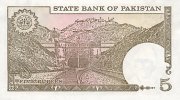
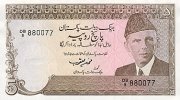
Pakistan: 5 Rups werden ungültig

Hier die Meldung aus Islamabad:


2004 - Pakistan's RS5/- Bank Notes will Cease to be Legal Tender From 1 July 2005. The State Bank has asked the SBP Banking Services Corporation to stop issuing Rs.5'- denomination notes from all its field offices with effect from 1 July 2004. It also asked the commercial banks to stop issuing re-issuable notes of Rs.5/- denomination from 31 January, 2005.
It may be pointed out that Rs.5/- denomination notes in circulation will continue to be legal tender up to 30 June 2005. Banks will continue to accept these bank notes from the members of the general public without any restrictions, whatever, in exchange of bank notes of higher denomination or Rs.5/- coins. Banks have also been asked to surrender these notes to their nearest/linked Field Office of State Bank of Pakistan Banking Services Corporation/Chest Branches of National Bank of Pakistan up to 30 June 2005. Rs.5/- bank notes will ease to be Legal Tender with effect from 1 July, 2005. Central Bank of Pakistan's Press Release 12 May 2004.


Quelle: State Bank of Pakistan
http://www.sbp.org.pk/
 

Anhänge

  • PakistanP38-5Rupees-(1986)_b.jpg
    PakistanP38-5Rupees-(1986)_b.jpg
    38,5 KB · Aufrufe: 607
  • PakistanP38-5Rupees-(1986)_f.jpg
    PakistanP38-5Rupees-(1986)_f.jpg
    42,1 KB · Aufrufe: 548
KROATIEN: neue 10 Kn Note 2004 - 10 J. Unabhängigkeit

Hier die Meldung aus Zagreb:

CROATIAN NATIONAL BANK

COMMEMORATIVE 10 KUNA BANKNOTE GOES INTO CIRCULATION

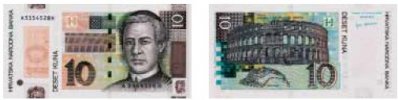
On the occasion of the 10th anniversary of the introduction of the kuna as the monetary unit of the Republic of Croatia (30 May 1994 - 30 May 2004), the Croatian National Bank is putting into circulation on 24 May 2004 a commemorative 10 kuna banknote and an issue of regular 1 kuna coins, bearing the date "1994-2004".

The new 10 Kuna banknote is identical in appearance to the 10 Kuna banknote currrently in use (date of issue 7 March 2001), but bears an additional commemorative text on the obverse of the banknote, in the area of the banknote's watermark. The text which is written in a microsript reads: "TENTH ANNIVERSARY OF THE CROATIAN MONEY KUNA AND LIPA 2004", creating a rectangular basis within which, by bold typing certain letters and numbers a visible number 10 effect is obtained. Across this basis, in three lines in iridescent colour, the word "ANNIVERSARY" is printed. The predominant colour of the rectangular basis is orange. The reverse of the banknote bears the date of issue, 30 May 2004.


Quelle: Kroatische Nationalbank, Zagreb
www.hnb.hr

PS anbei die Bilder des Scheins - besserer scan folgt!!!
 

Anhänge

  • CRO_10kn_2004.jpg
    CRO_10kn_2004.jpg
    21,8 KB · Aufrufe: 642
RUSSLAND: neue modifizierte Banknoten

Russland gibt seit letzter Woche "neue" Banknoten in bisherigem Design und mehr security features aus.

Hier die diversen Meldungen + Bilder:

Meldung 1

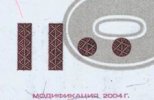
2004 - New banknotes entered into circulation in Russia today according to Gateway to Russia.com's 21 July 2004 article of the same name. In conflicting reports from Gateway to Russia.com, also 21 July 2004, the new modified 2004 issues of the 1997 notes will not be released till August 16, 2004. Perhaps one of our Russian readers can clarify this. The new designs will remain the same, but some new anti-counterfeiting features will be added to the 2004 notes. These notes will circulate along with the older notes which are sceduled to be withdrawn in 12 to 18 months. To view the new designs and their new features we have provided a link to the Bank of Russia

Quelle: CBR, 2004

Meldung 2

New Rubles More Secure

ROSBUSINESSCONSULTING
New banknotes with denominations of 10, 50, 100, 500 and 1000 rubles are set to enter into circulation.

Their design will remain the same but some new features will appear that will be easy to notice but difficult to counterfeit.

The new notes differ from the old banknotes by the level of protection. According to the rules and recommendations of criminalists, it is necessary to introduce changes to the design of banknotes and securities once in every 5 to 7 years. This is the second modernizationí of notes introduced since 1997.

The first one took place three years ago.

The new notes have a special pattern. Its color changes depending on a visual angle.

In addition, a security magnetic thread has been embedded in the paper, which previously was on notes of some other countries only. 100-ruble notes and higher are protected more seriously.

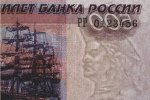
Another important protective feature that helps identify a note easily is microperforation, which is made by a very complicated laser. Counterfeiters cannot afford to buy such equipment, experts believe. The 1000-ruble note, on which the emblem of the city of Yaroslavl changes its color depending on a visual angle, has the best protection.

The new banknotes entered into circulation on July 21, Rossiya television channel reported and the old ones will be gradually withdrawn from circulation and will disappear in 12 to 18 months.

According to experts with Gosznak, the Russian printing and engraving association, after changes have been introduced, the ruble will be protected against forgery better than the world's two most popular currencies - the dollar and the euro.


Quelle: http://www.sptimes.ru/archive/times/988/news/b_13103.htm

Meldung 3

Central Bank Introduces New Banknotes

MosNews

On Monday, August 16, the Central Bank of Russia introduced new modified banknotes worth 10, 50, 100, 500 and 1000 rubles. MosNews wrote about the new banknotes in May, when the financial authorities first introduced them to the public.

Arnold Vojlukov, first deputy chairman of the Central Bank told RIA Novosti that August 16 is considered the official issue date, but the banknotes won’t enter public circulation until September. He also stressed that the new modified banknotes will be circulating alongside the old ones, until the latter’s complete wearout. “There will be no exchange of new banknotes for old ones,” said the Bank’s representative.

The new banknotes will look virtually the same as the old ones, but the level of their counterfeit protection has been significantly raised. The goal of the new banknotes is to ease the controls over authenticity that can be done not only by special mechanisms but by ordinary people as well. The new ruble banknotes will be protected with a rainbow-stripe effect and a metallised protective thread. Additionally the banknotes worth 100, 500 and 1000 will be protected with laser micro perforation which is visible if one holds the banknote up to a light source. The same method of protection is used in Swiss francs which are considered to be the most difficult currency in the world to counterfeit.


Quelle: http://www.mosnews.com/money/2004/08/16/newbanknotes.shtml
 

Anhänge

  • RUS_modifikacija_2004.jpg
    RUS_modifikacija_2004.jpg
    6,8 KB · Aufrufe: 600
  • Laser perforation on a 500 ruble banknote Image from www.goznak.ru.jpg
    Laser perforation on a 500 ruble banknote Image from www.goznak.ru.jpg
    30 KB · Aufrufe: 601
Und nochmal Russland: Keine währungsunion mit Belarusd/Weissrussland

Hier die Meldung:

No common currency for Russia, Belarus on January 1, 2005 — Putin
Russian President Vladimir Putin said Russia and Belarus are unlikely to adopt a common currency on January 1, 2005.

"It is unlikely that we will be able to realize the plans to introduce the Russian ruble on the territory of Belarus from January 1, 2005," Putin said after meeting with his Belarussian counterpart Alexander Lukashenko in Sochi on Saturday.

At the same time, he stressed that "from the point of view of specialists and the economic interests of Belarus and Russia, these issues have practically been resolved." "We are currently at the political-psychological point of decision-making," Putin said.

"Time is needed to prepare society for this step," Putin said.

Putin also admitted that "specialists have some other questions." "We will discuss all issues in a calm and friendly fashion. We will not stop this work and will continue it," he said.

Lukashenko, in turn, stressed that "all agreements on the introduction of a common currency, except for one, which will likely have to be amended, are practically ready.. As soon as the time comes when we will be able to consciously decide to introduce a common currency, we will make that decision," he said.

(based on the information distributed by Interfax)


Quelle: myBelarus.info
 
mika-r schrieb:
Unter dem Link:

http://www.boj.or.jp/en/money/02/bnnew.htm

können die Abbildungen und Daten der neuen Serie, auf denen auch erstmals eine Frau abgebildet sein wird, betrachtet werden.

Scans werden nachgereicht


Japan To Put New Banknotes In Circulation Nov 1 - Kyodo

Copyright © 2004, Dow Jones Newswires


NEW YORK -(Dow Jones)- The Finance Ministry said Tuesday it will put newly designed Y10,000, Y5,000 and Y1,000 bills into circulation on Nov. 1, the Kyodo news agency reported.

The new banknotes have holograms and other up-to-date technology to prevent forgery.

They were originally scheduled to go into circulation in July. The release was postponed due to work on designing a portrait of Meiji-era novelist Ichiyo Higuchi (1872-1896) for the Y5,000 bill, which took longer than expected.

Kyodo reported that the redesigned Y10,000 bills will feature educator Yukichi Fukuzawa (1835-1901), while the new Y1,000 bills will feature microbiologist Hideyo Noguchi (1876-1928).

(END) Dow Jones Newswires

08-10-04 0627ET
 
Zurück
Oben